
There are two brain hemispheres, left and right. Joined by the corpus callosum (which keeps these two symmetrical hemispheres apart, whilst also providing a path for communication). The two hemispheres interact and work together. Each perceives, and thus creates, a different kind of world!.
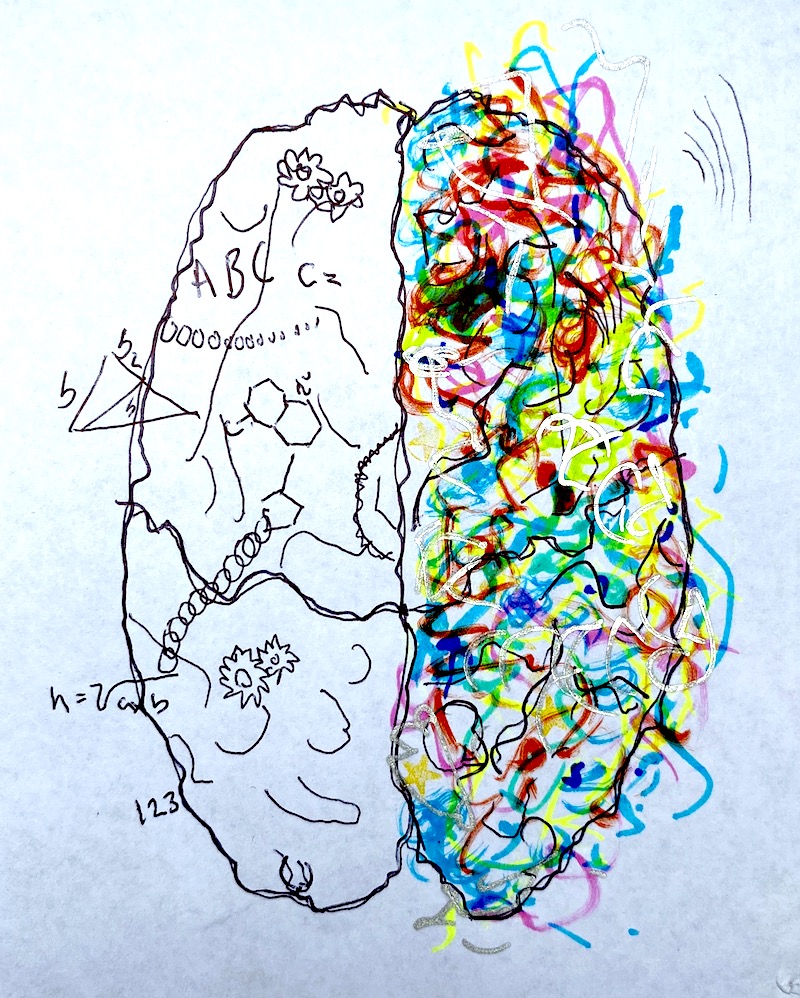
Iain McGilchrist explores the philosophical and psychological implications of what is known as hemispheric specialisation. He describes the way that culture and society are impacted by the unique way each hemisphere ‘attends’ to the world.
The left hemisphere is concerned with the known, with no appreciation for ambivalence – it thinks that it knows everything. It generates a mechanistic understanding of what it is to be human. It’s a world of ‘either/or’, reason, procedure, and logic.
The left hemisphere pays precise attention and reduces the world to ‘things’ and parts. It sees everything as static, separate, distinct, and disembodied – often abstracting information from its wider context.
The left hemisphere’s world is inanimate and mechanistic; it is not emotionally orientated. It pays focused attention with a view to mastery. This kind of attention serves us well in an emergency!
The right hemisphere is concerned with what we don’t know; it’s a hemisphere comfortable with mystery and paradox, seeing the broad picture. It is aware that it doesn’t know everything.
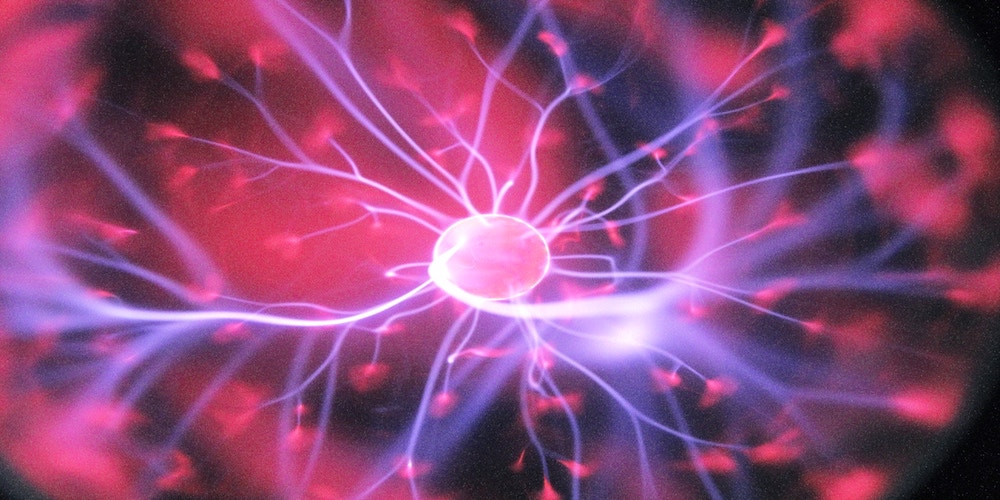
The right hemisphere’s world is creative, with high levels of emotional and social intelligence present. In perceiving the ‘whole’, the right hemisphere looks for gaps in the structure. The gaps are where the light gets in, as it were!
The right hemisphere generates a holistic, experiential understanding of what it means to be a human.
The right hemisphere’s world is one of ‘both/and’. It’s a world of coherence, connectedness, fluidity, flow and change. It’s a relational, animate, and embodied world. Reality is known within the context of presence and gestalt.
The two hemispheres of the brain are meant to work together. We need polarity, balance, and integration. We need the part AND the whole.
Within the context of the connectedness of our inner and outer worlds, McGilchrist suggests the left hemisphere has become dominant within modern Western Society.
In any given situation, our brains are offered two perceptions by both the left and the right hemisphere. Our challenge is to become aware of both, and, as a result, to make balanced decisions.
What is known as the ‘Industrial Revolution’ took place between 1750 and 1900.

Arguably, a mechanistic and reductionist way of seeing initiated and established this period of great technological advancement. This great shift likely played a key role in the left brain dominance we are experiencing at a societal level.
McGilchrist argues that nothing is isolated – not even an organelle in a cell; not even a proton, neutron, or electron. Even ‘parts’ are part of a whole, which is what he argues is the ‘matter with things’.

Instead, he claims, we are always in process and in connection.
We are part of a ‘greater’ whole and, therefore, reduction to parts is merely an illusion.
We need to see the whole, and to become aware of what we don’t know (yet)!
It has been said that we live in a world lacking in meaning! We can call on the left hemisphere to bring some order, but we might need some help from the right hemisphere to bring some balance and harmony back into society!
More people are depressed and disconnected from their bodies, others, and ‘nature’ than ever before!
What would it look like to reintroduce awe, wonder and mystery into society?
What would it look like to reconnect with our bodies, with each other?
What would it look like to explore ways of knowing that encompassed holistic, intuitive, and imaginative thinking?
A different way of learning and knowing...

“True science has more questions than answers, and it does not have any answers that can’t be questioned.”
Albert einstein
So where does dyslexia and ADHD come into the equation?
Pioneering scientist, Albert Einstein often saw his discoveries intuitively and in his ‘mind’s eye’. Einstein was a known dyslexic and it is said that he often had to ‘work backwards’ to show how he came up with his discoveries!
Dyslexia is a title for a neurological divergency that (with the very limited testing available) is already estimated to affect at least 10% of the population worldwide. However, it’s very likely to be much higher a percentage than the current estimate.
Dyslexia is associated with a mildly impaired development of ‘magnocellular cells’ (also known as magnocells and M-cells) in the brain (see the work of Professor John Stein for more information).

Whereas some people often find linear sequencing, time-keeping, and subjects like reading, writing and maths easier, those with dyslexia might find creative subjects easier, as they see laterally, holistically, and can spot patterns.
In dyslexics and those showing ADHD tendencies, the left brain is said to remain more proficient at visual-spatial processing – even in light of the kind of ‘left dominant’ society previously mentioned.
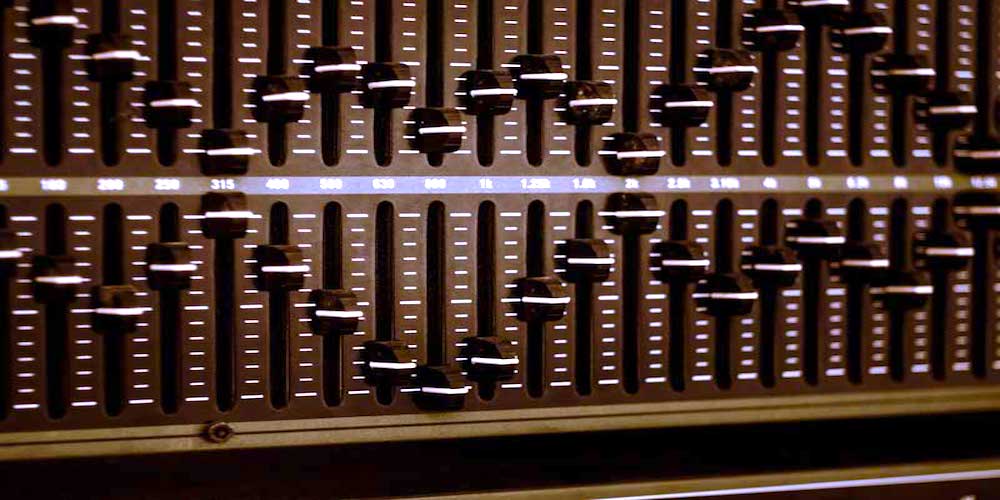
Therefore, the dyslexi/ADHD brain works in a more balanced way, as they exhibit stronger right-brained visual thinking than for example a non-dyslexic brain.
Stein points out that this way of seeing is more aligned to nature. Society needs dyslexics and right-brained thinkers; they often excel at subjects and skills that others don’t!
Writer, Thomas West points out that so many incredible entrepreneurs and pioneers across history have been dyslexic.
So many amazing and important and discoveries have happened as a result of this unique way of seeing!
A few examples…
Mandelbrot discovered fractal mathematics (essential for mobile phone technology); Watson and Crick were the first to envision the structure of DNA; Einstein was inspired with the ‘theory of relativity’; and Faraday was a pioneering scientist at the world-famous Royal Institute. And let’s not forget world-changing business leaders like Richard Branson.
Dyslexics and often those with ADHD often seen to be gifted with being able to see things ‘out of the box’, which can often be coupled with a greater level of fortitude, developed through overcoming the struggles associated with not thriving in left-dominant modes of education.
Creative leaning pioneer, Ken Robinson argues that we have outgrown the post-war education system. Remember the days when the ’11+’ exam decided whether students were going to attend either ‘technical’ or ‘grammar’ school? Whilst the ’11+’ has been scrapped, Robinson is highly critical of modern mass education that still prepares students for the workforce, and for the kind of standardised, mechanised society that prevails today.
We’ve divided learning up. We’ve reduced it to subjects, which are separated by ringing bells!
There is an over-focus on testing and curriculums… there’s a fear of being wrong!
This sounds a lot like the world of the left brain!
Left-brain dominant learning can be said to perpetuate some of the problems we face today. A creative approach to education would equate to a greater level of hemispheric balance, which would have society-wide and world-wide impacts.
The world is facing new challenges – an ecological crisis, a supposed overpopulation problem, and a movement towards an automated workspace. The survival of humanity depends new solutions for new problems, argues Robinson!
We need big-picture, creative solutions!
Today’s children hold the key to so many of these creative solutions, they just need to be unlocked!
We need to create a new system, one where creativity thrives, and one where every child flourishes.
We need a move away from left-brain dominance and a move towards creative education.
This isn’t just for some students, but for all students.
It’s just not good enough that some students fall behind because their uniqueness isn’t cultivated.
So where does Footnotes come into all of this?
At Footnotes, we help to support and cultivate a visual and multi-layered approach to thinking and learning. We offer a range of techniques to help all kinds of minds.
When working with people who have a dominant right hemisphere response, Footnotes plays a vital role in helping individuals to capture the important parts of the ‘big picture’.
Footnotes helps people to find realistic ways of actioning the most important subjects detailed on their ‘Grids’.
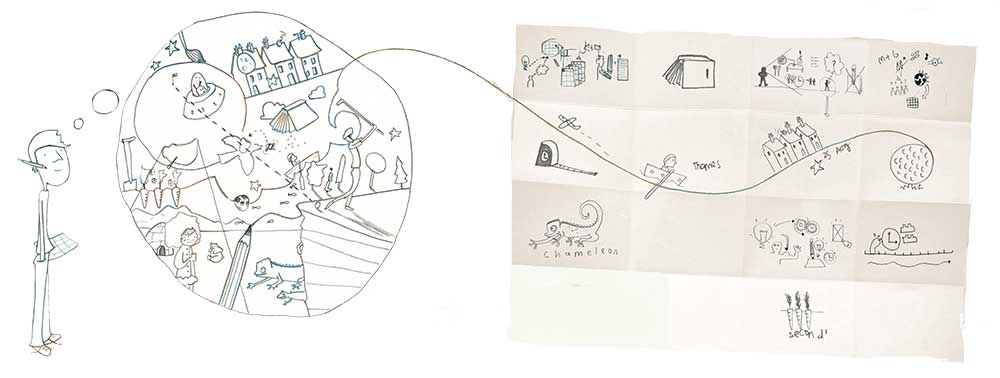
Footnotes also helps individuals who recognise that they are left brain dominant, or who recognise that the left hemisphere plays a major part of their decision-making throughout the day.
As a result of using Footnotes, individuals are able to move themselves into new ways of processing, and potentially move away from the pitfalls of left hemisphere thinking.
The act of drawing and thinking creatively outside of a linear requirement automatically challenges the left hemisphere dominance, giving opportunity for the right hemisphere to play its role.
Footnotes activities directly help an individual to redress the balance of the left and the right hemispheres when problem-solving, and when making general decisions in life.
With the process of mapping thoughts out with the Footnotes Grids, individuals can directly observe thinking processes, and notice how one choice is possibly informed by either the left or the right hemisphere, or both!
A reflexive approach gives rise to opportunities for an individual to change the way they respond in a given situation.
The various Footnotes strategies available promote a multi-layered approach to learning and living life. This creative process naturally helps individuals to lead their own inquiry and to be less reliant on being led or taught. Instead, the Grid-ing process helps individuals to be intuitively aware of what they should be doing next.
Footnotes offers personalised creative thinking tools that utilise both hemispheres and encourage imagination, intuition, and therefore healthy levels of individuality – even within structured curriculum situations.
As a result of engaging with the Footnotes Programme, individuals often say that they feel more intelligent due to the awareness of being able to process thoughts and information more quickly and effectively. They often let us know that this helps them to feel more confident and more capable in their day-to-day decision making.

Many have reported looking back through their life-choices, remembering how Footnotes empowered them to be bold in pursuing their dreams and in making formative decisions.
We’ve observed huge changes in Footnotes users’ time-management abilities, and also a significant improvement in effective social interaction – due, in part, to individuals feeling more informed by their intuition and multi-sensory abilities. These huge and often immediate shifts become apparent once an individual has harnessed their natural visual thinking capabilities that emerge and are honed through ‘Grid-ing’.
In the absence of these sorts of realisations that are uncovered through a journey of self-discovery, we witness that dyslexics become overly reliant on being lead by others (rather than leading their own learning). This dynamic is exacerbated by the large amount of testing carried out within the current education system.
“The education system has mined our minds in the way that we strip-mine the Earth for a particular commodity, and for the future it won’t serve us.”
Ken Robinson
We need change.
We need to recreate an education system that encompasses all of the wonderfully unique ways of seeing and learning.
We need to move towards a re-balanced society; we need to envision and co-create a world of balanced minds and collectives.
The future starts now. Happy Grid-ing!